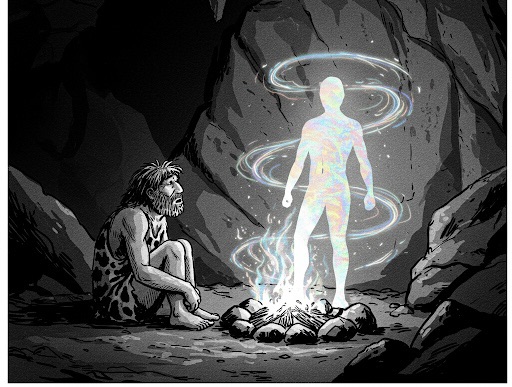
“The Beginning of Infinity” by David Deutsch is a profound exploration of human knowledge, progress, and potential. Published in 2011, this philosophical book argues that humanity’s capacity for progress through explanatory knowledge is literally infinite – hence the title. Unlike most animals who are constrained by their evolved instincts and limitations, humans have developed the unique ability to create explanatory knowledge about anything, from quantum physics to moral philosophy.
While gold is rare in the Universe, explanations are an ever rarer form of alchemical gold that only exist where intelligent beings do.
The book challenges common assumptions about human limitations and argues that our problem-solving abilities, when properly applied through good explanations and criticism, have no fundamental bounds. Through a series of wide-ranging chapters covering everything from quantum physics to moral philosophy, evolution to epistemology, Deutsch builds a comprehensive case for optimism about human potential, not based on blind faith but on a deep understanding of how knowledge grows and progresses.
What makes this book particularly remarkable is how it unifies seemingly disparate ideas – scientific method, cultural evolution, political philosophy, and more – under a single powerful thesis about the nature of human knowledge and progress. Whether you’re interested in science, philosophy, or human potential, Deutsch’s work offers a transformative perspective on what humans can achieve through the power of good explanations.
What’s most amazing about “The Beginning of Infinity” is how Deutsch fundamentally reframes human potential and progress. Instead of seeing human knowledge and capabilities as fundamentally limited – by our brains, our senses, or our nature – he presents a radical vision of unlimited progress through our unique ability to create explanatory knowledge.
Deutsch demonstrates that there’s something profound and almost miraculous about humans’ ability to understand the universe. Unlike other species, we can grasp concepts completely removed from our everyday experience – from quantum mechanics to the multiverse to mathematical abstractions. We aren’t limited to understanding things at our physical scale or things we can directly observe. Through explanation and theory, we can comprehend both the unimaginably small (quantum phenomena) and the unimaginably large (cosmic structure).
Perhaps most striking is his argument that this capacity for explanatory knowledge makes us unique not just on Earth, but potentially in the cosmos. He suggests that once a species develops the ability to create explanatory knowledge – as humans have – they become what he calls “universal explainers,” capable of understanding anything that is understandable. This means we aren’t just another species with slightly better pattern recognition or tool use – we represent something fundamentally new in the universe.
The book’s central thesis – that progress can continue indefinitely through better explanations – challenges both pessimistic views about human limitations and optimistic but shallow views about technological progress. Deutsch shows how genuine progress comes not just from accumulating facts or making incremental improvements, but from breakthrough explanations that transform our understanding. This means our potential for progress isn’t limited by resources or computational power, but only by our ability to create better explanations.
What makes this vision particularly compelling is how Deutsch ties it to both everyday human creativity and our grandest scientific achievements. He shows how the same fundamental process – creating explanatory knowledge through conjecture and criticism – underlies both a child learning about their world and a physicist developing a new theory of the cosmos. This suggests that the capacity for infinite progress isn’t some distant future possibility, but is inherent in human nature itself.
Chapter 1
In “The Beginning of Infinity,” David Deutsch’s first chapter, “The Reach of Explanations,” establishes his fundamental argument about the unbounded potential of human knowledge and understanding. The chapter begins by examining the ancient Greek philosophers, particularly the Presocratics, who revolutionized human thinking by seeking explanatory theories about the world rather than simply accepting traditional myths or relying solely on observations. This marked a crucial shift in how humans approached knowledge and understanding.
Deutsch introduces his concept of “good explanations,” which he defines as theories that are hard to vary while still explaining the phenomenon in question. If an explanation can be easily modified while still seeming to explain something, Deutsch argues it’s probably not a good explanation. He challenges pure empiricism – the idea that all knowledge comes from sensory experience – by demonstrating how scientific theories often extend far beyond what we can directly observe. For instance, our understanding of stars involves explanations about nuclear fusion and quantum mechanics, phenomena that we cannot directly perceive.
The chapter explores the concept of explanatory “reach,” where certain explanations prove powerful not just in their original context but in explaining other phenomena as well. Newton’s laws of motion serve as a prime example, explaining both terrestrial phenomena like falling apples and celestial mechanics like planetary orbits. Deutsch emphasizes that progress in human knowledge stems not merely from accumulating more data, but from creating better explanations. He positions the human capacity for explanation as our distinctive characteristic and the driver of progress.
Deutsch takes a strong stance against instrumentalism, which views scientific theories as mere predictive tools rather than descriptions of reality. Instead, he argues that good explanations tell us about reality itself, not just about our observations. He introduces a broad framework of “problems” and “solutions,” suggesting that all progress consists of transitioning from problems to better solutions through explanation and criticism. This approach emphasizes the creative and critical aspects of human knowledge-building rather than seeing it as a purely accumulative process.
The chapter’s title reflects Deutsch’s broader thesis that human knowledge has unlimited potential for growth through better explanations. By establishing the importance of explanatory knowledge and challenging traditional views about the nature and limits of human understanding, this opening chapter lays the philosophical foundation for the rest of the book. It introduces Deutsch’s optimistic vision of human progress as an infinite journey of discovery and explanation, limited only by our ability to create and improve upon our explanations of reality.
Chapter 2
Chapter 2 of “The Beginning of Infinity,” titled “Closer to Reality,” deepens Deutsch’s exploration of scientific knowledge and realism. He begins by challenging the common misconception that our scientific theories merely approximate reality or represent convenient fictions. Instead, he argues that good scientific theories actually bring us closer to understanding objective reality, even when dealing with abstract or seemingly counterintuitive concepts.
Deutsch uses the development of theories about light as a central example throughout the chapter. He traces how our understanding evolved from ancient ideas about light being a stream of particles, through wave theories, to our modern quantum mechanical understanding. Rather than seeing these transitions as merely replacing one approximation with another, Deutsch argues that each successive theory brought us closer to reality by explaining more phenomena and providing deeper insights. He emphasizes that while early theories might have seemed more “common-sense” or intuitive, our current theories, though more abstract, actually capture more truth about the nature of reality.
The chapter introduces the concept of “theory-laden” observation, explaining that what we perceive is not just raw sensory data but is inherently shaped by our theoretical understanding. Deutsch argues that this isn’t a weakness but a strength – our theoretical frameworks allow us to see more of reality, not less. He uses the example of how we can “see” that the Earth is spinning, not through direct observation but through our understanding of physics and astronomy. This leads to his argument that abstract theories, rather than being less “real” than direct observations, can actually bring us closer to reality.
A significant portion of the chapter is devoted to critiquing instrumentalism and empiricism. Deutsch argues against the view that scientific theories are merely tools for prediction or that they should be judged solely by their observable consequences. Instead, he advocates for scientific realism – the view that scientific theories, when successful, tell us about actual features of reality. He explains how seemingly abstract concepts like quantum wavefunctions or mathematical structures aren’t just convenient fictions but represent real aspects of the physical world, even if they’re not directly observable.
The chapter concludes by tying these ideas back to his broader thesis about the infinite reach of human knowledge. Deutsch argues that our ability to create increasingly accurate and comprehensive theories about reality isn’t limited by our human scale or sensory capabilities. Instead, through the creative process of developing better explanations, we can continue to get closer to understanding reality at all scales, from the quantum to the cosmological. This supports his overall argument that progress in human knowledge is unbounded, with each good explanation bringing us closer to understanding the true nature of reality, even as it reveals new problems and questions to explore.
 Light Being
Leave a comment