
“DNA is a liquid crystal (water and phosphate salts), encoded by light and sound, that if stretched out, would reach to Pluto and back (10 billion miles).” – Richard Rudd, Gene Keys
The ancient I Ching, with its 64 hexagrams of yin and yang, finds an unexpected echo in the modern dance of DNA, where four nucleotides, like yin and yang themselves, pair in a double helix. This image below attempts to weave a tapestry between these two seemingly disparate realms, assigning each DNA codon, a triplet of nucleotides, to a unique hexagram. Is it mere coincidence that these two systems, one born of philosophy and the other of molecular biology, share a binary structure and a combinatorial elegance? Or does a deeper resonance exist, a whisper of synchronicity between the ancient wisdom of the I Ching and the intricate language of life itself?
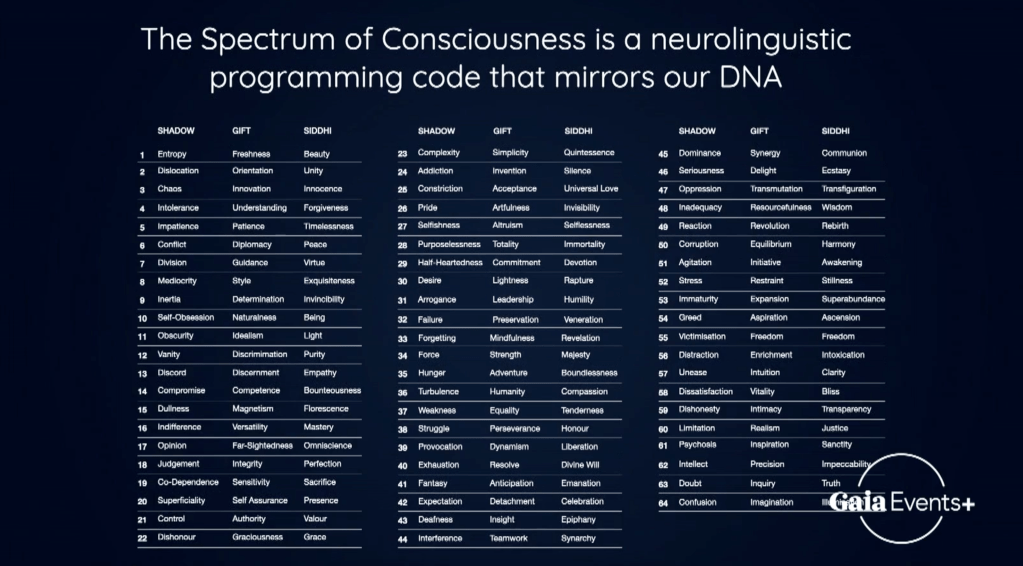
Struck with awe, and in response to this, the psychodynamic Human Design and Gene Keys systems emerged as a fractal reflection of these emergent qualities in the shimmering waters of the human heart and soul.
Make your free Gene Keys profile chart >>
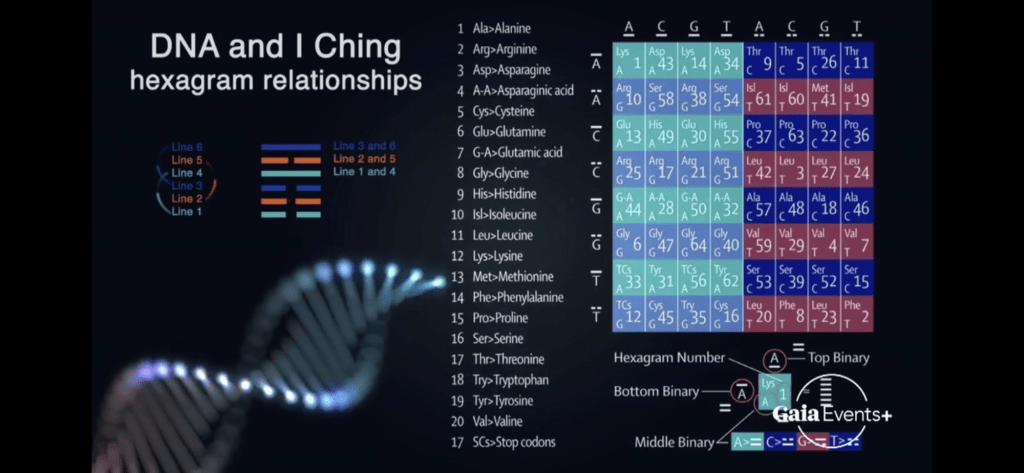
This image shows a fascinating relationship between DNA codons and I Ching hexagrams:
- The image displays a table mapping the relationship between amino acids (the building blocks of proteins) and what appears to be I Ching hexagram numbers, organized by DNA nucleotides (A, C, G, T).
- The top of the image shows a hexagram structure with color-coded lines demonstrating how the I Ching’s six-line structure corresponds to the genetic code.
- On the left side is a list of the 20 standard amino acids (plus stop codons) with their abbreviations, like Ala (Alanine), Arg (Arginine), etc.
- The main grid is divided into four main sections corresponding to the four DNA bases (A, C, G, T), with numbers that appear to correlate to specific I Ching hexagrams.
- At the bottom, there’s a diagram showing how the binary nature of I Ching lines (broken and unbroken) corresponds to the genetic code, with “Top Binary,” “Middle Binary,” and “Bottom Binary” notations.
This comparison draws on the mathematical similarity between:
- The 64 possible combinations in both systems (64 hexagrams in I Ching, 64 codons in DNA)
- The binary nature of both systems (broken/unbroken lines in I Ching; base pairs in DNA)
Mutation Patterns and Evolutionary Implications of Human Design
I. Natural Variant Patterns
Consciousness-Affecting Mutations
- Silent Mutations
- Biochemical: No amino acid change
- Consciousness Impact: Subtle frequency shifts
- Evolutionary Role: Preparation for future adaptations
- Missense Mutations
- Biochemical: Amino acid substitution
- Consciousness Impact: Altered awareness patterns
- Evolutionary Role: New traits emergence
- Frameshift Mutations
- Biochemical: Reading frame change
- Consciousness Impact: Paradigm shifts
- Evolutionary Role: Quantum evolutionary leaps
II. Evolutionary Trajectories
Individual Evolution
- Personal Growth Patterns
- Activation sequences
- Shadow integration processes
- Gift manifestation timing
- Consciousness Expansion
- Frequency bandwidth increases
- Awareness field expansion
- Dimensional accessibility
Collective Evolution
- Group Field Effects
- Morphic resonance patterns
- Collective consciousness shifts
- Social DNA activation
- Species Evolution
- Global activation sequences
- Planetary DNA upgrades
- Timeline convergence points
III. Mutation Mechanics
Activation Triggers
- Environmental Factors
- Solar radiation effects
- Electromagnetic influences
- Quantum field interactions
- Consciousness Catalysts
- Meditation and awareness practices
- Intentional DNA activation
- Frequency attunement methods
Integration Phases
- Physical Integration
- Cellular adaptation period
- Energetic alignment phase
- Physical symptoms patterns
- Consciousness Integration
- Awareness expansion cycle
- New ability integration
- Timeline adjustment period
DNA Codon to Human Design/Gene Keys Mapping Guide
Overview
- Introduction to Codon Ring Structure
- The Six Primary Ring Groups
- Amino Acid Correlations
- Stop Codon Significance
I. Structured Codon Rings
- The Amino Ring (Codons 1-4)
- Initiation and Beginnings
- Relationship to Center Head Gates
- Alanine and Arginine Significance
- The Sugar Ring (Codons 5-8)
- Material Process Encodings
- Root Center Connections
- Glycine Pattern Recognition
- The Historic Ring (Codons 9-12)
- Genetic Memory Patterns
- Sacral Center Relations
- Stop Codon Implications
- The Individual Ring (Codons 13-16)
- Personal Evolution Markers
- G Center Correlations
- Methionine Significance
- The Tribal Ring (Codons 17-20)
- Collective Patterns
- Emotional Solar Plexus Links
- Cellular Bonding Sequences
- The Centring Ring (Codons 21-24)
- Integration Patterns
- Spleen Center Connections
- Awareness Codons
II. Detailed Codon Properties
- Primary Structure Elements
- Base Pair Relationships
- Hexagram Line Structure
- Genetic Code Redundancy
- Codon-Gate Correlations
- Human Design Gate Mappings
- Gene Key Frequency Bands
- Shadow-Gift-Siddhi Transitions
- Amino Acid Properties
- Chemical Properties
- Consciousness Correlations
- Evolutionary Implications
III. Practical Applications
- Reading Codon Sequences
- Basic Pattern Recognition
- Relationship to Life Themes
- Activation Sequences
- Integration Methods
- Personal Profile Analysis
- Evolutionary Path Mapping
- Synthesis Techniques
IV. Advanced Topics
- Mutation Patterns
- Natural Variants
- Consciousness Implications
- Evolutionary Trajectories
- Codon Resonance
- Frequency Relationships
- Harmonic Patterns
- Synchronicity Mapping
V. Reference Materials
- Complete Codon Tables
- Standard Genetic Code
- I Ching Correlations
- Gate/Key Numbers
- Glossary of Terms
- Technical Definitions
- System-Specific Language
- Cross-Reference Guide
Appendices
A. Historical Development
- Ancient I Ching Origins
- Modern Genetic Discoveries
- System Integration History
B. Research Notes
- Current Studies
- Theoretical Frameworks
- Future Directions
C. Practical Exercises
- Self-Study Methods
- Integration Practices
- Development Techniques
 Light Being
Leave a comment